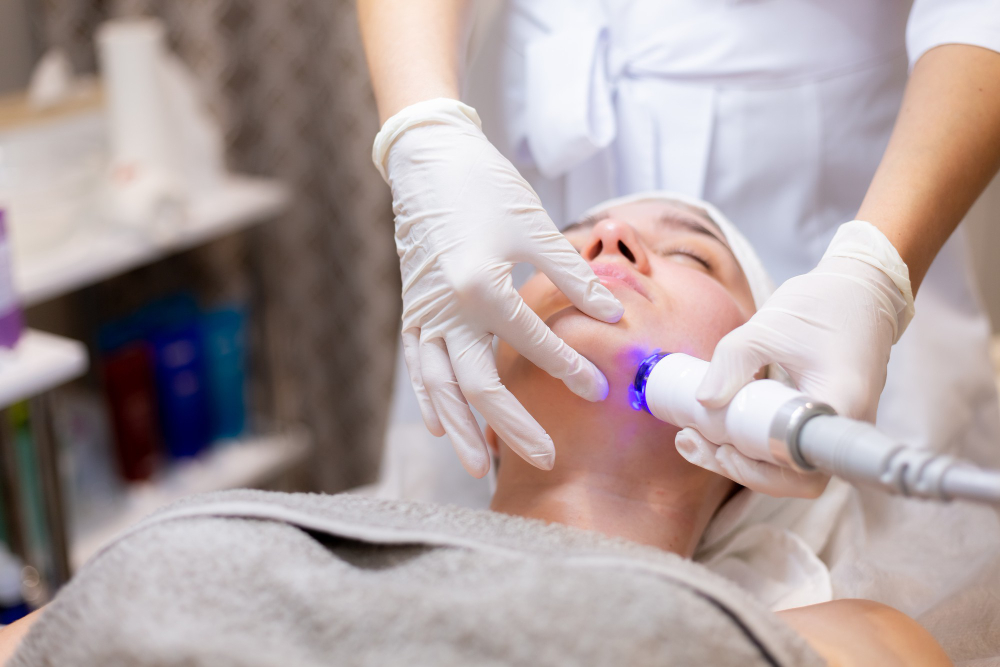


A soft jawline sends most patients straight to filler. It seems like the obvious fix: add volume, sharpen the edge, done. But that assumption causes more disappointing results than any other in jawline contouring. Filler restores volume in specific spots, but it can’t lift skin that’s actually sagging. Choosing the wrong route wastes money and delays the correction you actually need.
This guide compares the three main non-surgical options for jawline definition: dermal filler, collagen biostimulators, and focused ultrasound. Each works through a different mechanism, and each suits a different underlying cause.
Why the Cause Matters More Than the Product
Before choosing a treatment, you need to understand why your jawline looks soft. Three causes usually explain it, and each needs a different fix.
Volume loss happens when fat pads in the lower face shrink or shift with age. This creates a jawline that looks undefined because structure is genuinely missing. Skin laxity happens when the skin itself loses elasticity and starts to sag, even if the underlying volume hasn’t changed much. Fat accumulation under the chin creates a third pattern entirely, where excess tissue blurs the jaw’s edge regardless of skin tightness.
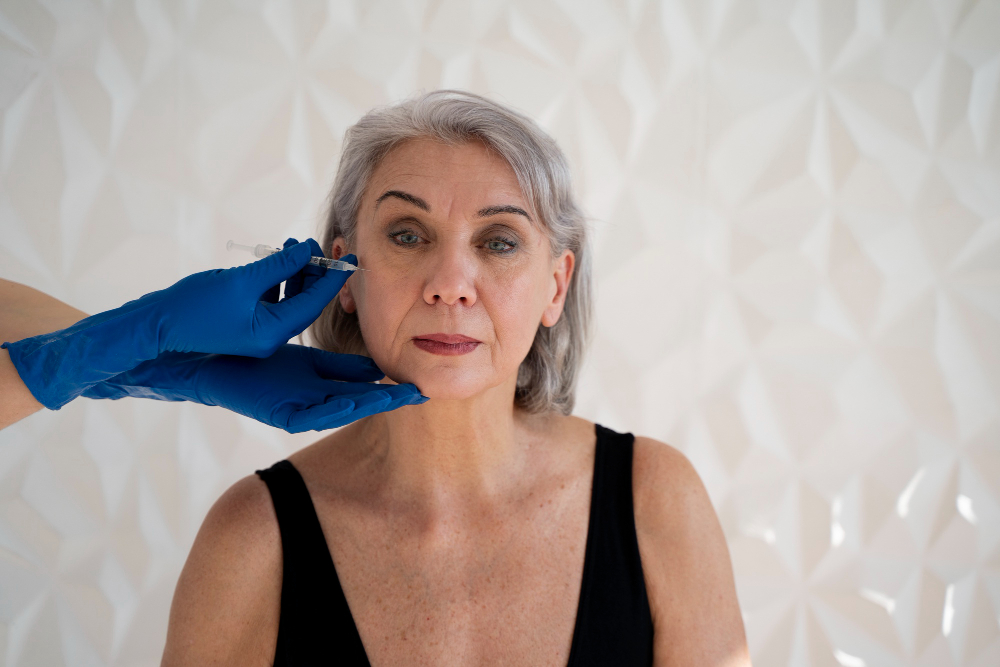
A doctor examines your face to identify which of these applies, sometimes a combination of two. Skip this step, and you risk treating the wrong problem. Adding filler to a jawline that’s sagging from laxity won’t lift it. It just adds volume on top of loose skin, which can make the area look heavier rather than sharper.
Dermal Filler: Best for Volume Loss
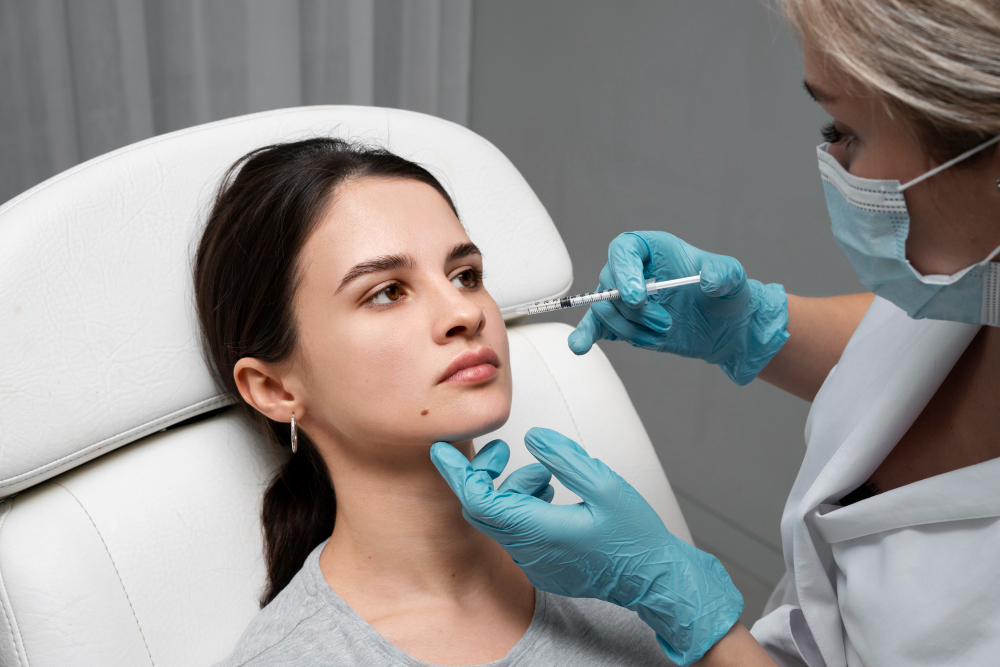
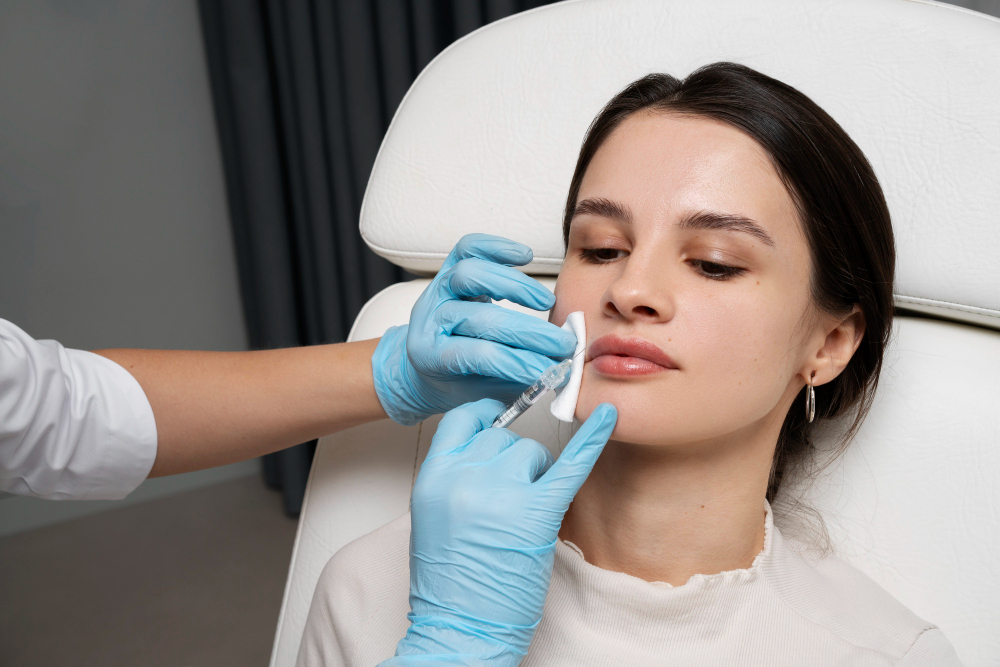
Filler works by adding hyaluronic acid gel directly along the jawline to rebuild lost structure. It restores contour where volume has genuinely disappeared, and it can also extend the jawline visually by adding definition at the angle and along the border.
Results appear immediately, right after injection, which makes filler attractive for patients with an event or deadline. A full jawline correction with dermal filler typically needs two to four syringes, depending on how much structure is missing and how defined you want the edge. Results usually last twelve to eighteen months before the gel breaks down and needs a top-up.
Filler works best on younger patients with genuine volume deficiency and reasonably tight skin. It won’t correct sagging on its own, and using it that way often produces a bulky, unnatural look rather than a sharper jaw.
Collagen Biostimulators: Best for Gradual Firming
Biostimulators work through a completely different mechanism. Instead of adding volume directly, they stimulate your own collagen production over the following months. This makes them suitable for patients with mild to moderate laxity who want gradual firming rather than an instant volume change.
Results build slowly. You won’t see much difference for the first few weeks, but improvement continues over two to three months as your body produces new collagen. This gradual timeline actually works in the patient’s favour, since the change looks natural rather than sudden.
A full course usually needs two to three sessions spaced four to six weeks apart, and results hold for twelve to eighteen months, similar to filler, but through a different mechanism. Biostimulators suit patients whose jawline problem comes mainly from lost skin quality rather than lost volume.
Focused Ultrasound: Best for Skin Laxity
Focused ultrasound targets skin laxity directly by delivering energy deep into the skin’s support layer, triggering a tightening response without cutting or injecting anything. This makes it the most suitable option when sagging, not volume loss, causes the soft jawline.
Results take longer to appear than filler or biostimulators. Most patients notice initial tightening within a month, with full results developing over three to six months as collagen remodels. One session typically holds results for around twelve months, though patients with more advanced laxity sometimes need a touch-up sooner.
Ultrasound doesn’t add volume, so it won’t help a jawline that’s genuinely lacking structure. Combining it with a hydrating skin booster treatment beforehand can improve how the skin responds to the ultrasound energy, since well-hydrated skin tends to tolerate the treatment better.
Comparing the Three Options
| Treatment | Best For | Onset | Duration | Typical Full Correction Cost (IDR) |
|---|---|---|---|---|
| Dermal filler | Volume loss | Immediate | 12-18 months | From 8,400,000 (2 syringes) |
| Collagen biostimulator | Mild to moderate laxity | 2-3 months | 12-18 months | From 8,400,000 (2 sessions) |
| Focused ultrasound | Skin laxity | 3-6 months | ~12 months | From 4,500,000 (full face) |
Costs vary depending on how much correction your face needs and which product a doctor recommends. These figures give a starting range rather than a fixed quote.
What About Excess Fat Under the Chin?
None of these three treatments dissolve fat directly. If submental fat is blurring your jawline, a doctor may recommend addressing it separately before or alongside contouring. Some clinics pair this with Mesolipolysis, which targets superficial concerns like pore refinement and oil control rather than fat reduction, so it’s worth confirming with your doctor exactly which mechanism suits your specific concern before committing to a combination plan.
Frequently Asked Questions
A1: Yes, many patients need both, since volume loss and skin laxity often occur together. A doctor usually sequences these treatments a few weeks apart rather than combining them in a single session.
A2: Pinch the skin gently along your jawline. If it feels thin and lacks structure underneath, volume loss likely plays a role. If the skin feels loose and moves independently of the bone, laxity is probably the main cause. A consultation gives a more accurate answer than self-assessment.
A3: This usually happens when filler gets used to correct laxity rather than volume loss. Adding gel on top of sagging skin adds weight without lifting anything, which can make the area look heavier. The right fix in this case is a tightening treatment, not more filler.